

In the woods at night sounds shorn of their source grow large, like pupils in a flash of light. Leaves become footsteps, wind turns to howls. Darkness veils the expected relations between things and moonlight gives them bizarre qualities, inverting appearances. Beyond the tent or cabin anything could be transpiring.
I could be describing certain regions of the mind. Those whorls of gray matter that formed long before our earliest ancestors grew conscious. There, in the psychic darkness, monsters grow. They are probably nothing but neurons misfiring, adaptations rendered vestigial by environmental change. Despite these reasoned assurances, my dreams still fill with their shapes.
Beowulf comes from the same place. It predates its own composition, some thousand years ago, originating in the darkness known as prehistory. Grendel, Grendel’s mother, the wyrm, these creatures parallel shadows in the human story: the anomic renegade, blood-vengeance, the human-animal struggle, an inexpungible penchant for evil. Their cthonic nature strikes you as hear them described:
     When the dragon awoke, trouble flared again.
     He rippled down the rock, writhing with anger….
                         The outlandish thing
     Writhed and convulsed and viciously
     Turned on the king.
Writhing, rippling, convulsing, the dragon slithers out of the deepest layers of the unconscious, disgorging ancient fears. Beowulf gives shape to the inchoate forces within, transfiguring nightmare into narrative.
At a glance this Anglo-Saxon epic resembles an exorcism, an attempt to kill the malevolent forces at the back of the mind. It’s better understood as an act of containment. Beowulf, the hero, dies defeating the last of the monsters. Finishing them off means murdering a part of himself.
The poem itself, however, overcomes the darkness without eradicating it. It preserves the monsters forever in the story of a hero’s triumph over them. The hero narrative, which Beowulf exemplifies, is a psychic script for combatting the primordial evils. Beowulf’s Christian elements have been downplayed, criticized, and denied any authenticity, but they are an expression of the poet’s belief in redemption, the spiritual mechanisms of overcoming.
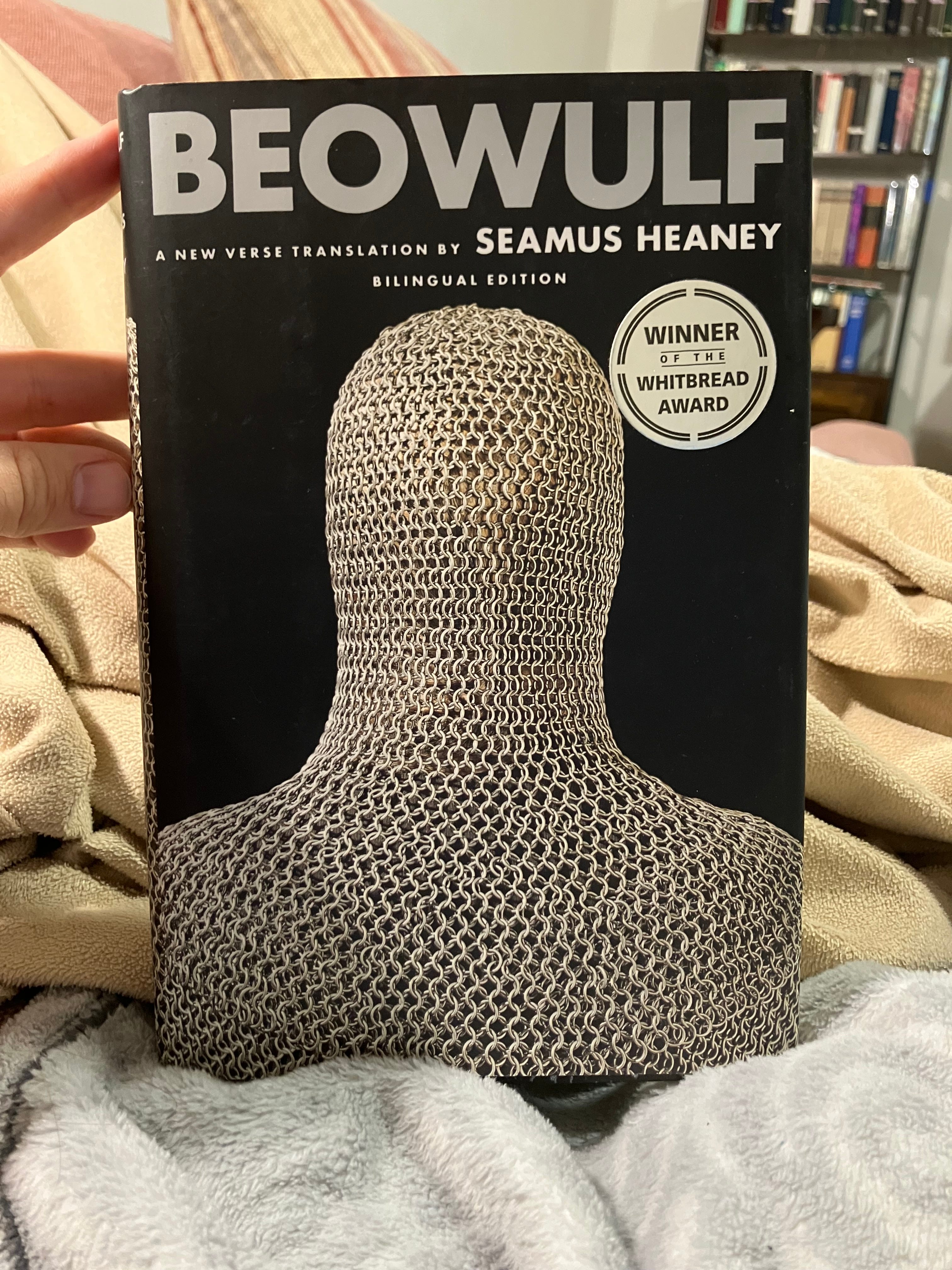
Consider how Grendel’s fate is sealed:
     The captain of evil discovered himself
     in a handgrip harder than anything
     he had ever encountered in any man
     on the face of the earth. Every bone in his body
     quailed and recoiled, but he could not escape.
     He was desperate to flee to his den and hide
     with the devil's litter, for in all his days
     he had never been clamped or cornered like this.
As a result of this tousle Grendel’s arm is wrenched from its socket; he frees himself from Beowulf’s grip only to be left limbless and mortally wounded. The socket and the unrelenting grip are clues to this scene’s template—Jacob’s wrestling with the angel. Grendel is a dark angel for sure, but victory over him grants Beowulf a name (recognition) and bounty (his reward by King Hrothgar).
Reading the poem, reading about Beowulf’s victories over the shapeless imaginings of the night made flesh, is like watching the dawn come on. The eyes have time to adjust as the light flushes the woods. Things take on a familiar aspect. There are still creatures lurking in the underbrush; they remain a danger. I can’t abolish the night or the monsters that fill my dreams. But in the day-lit world I can come to grips with them through the stories I tell. Or die trying.